Itinerary prepared and verified by Gangtok Holidays travel experts — can also be customized as per your schedule.
Itinerary
Day 1 :
Paro Airport – Thimphu ( 65 km / 2 hrs )
Meet & Greet on arrival at Paro Airport and transfer to Thimphu (7,710 ft) the capital city of Bhutan. On arrival check in at the hotel. Evening explore the Thimpu town by walk. Overnight stay in Thimphu.
Day 2 :
Thimphu Sightseeing
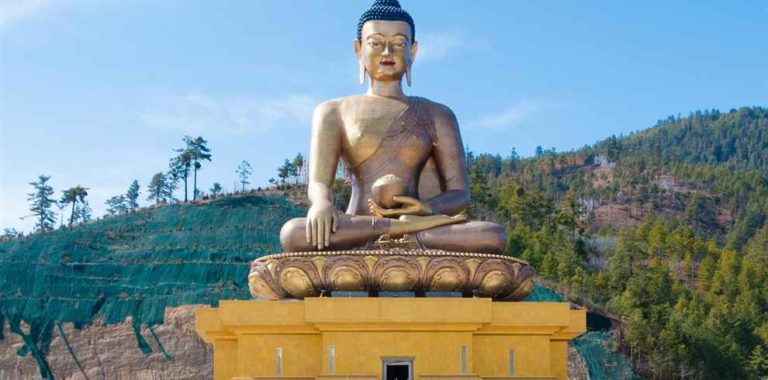
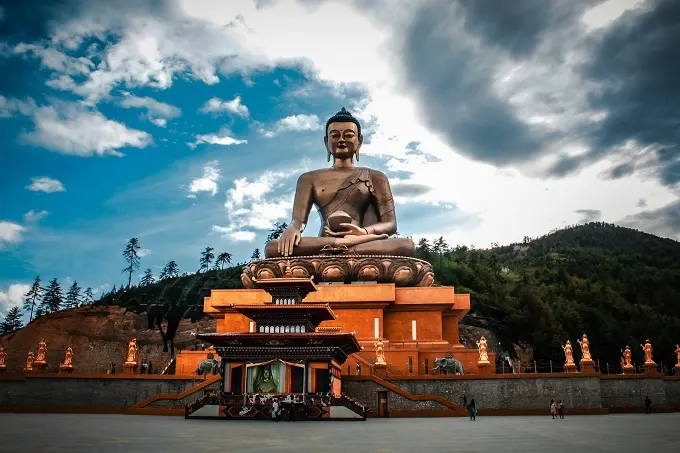
After breakfast, visit Kuensel Phodrang (Buddha Statue) a place for refreshing with a huge statue of Buddha on the top of the Kuensel Phodrang, National Memorial Chorten (Monument) & Folk Heritage Museum. Afternoon visit Sangaygang View Point, Changangkha Monastery, Taking Preserve Centre, The talking national animal of Bhutan can be seen here Tashichho Dzong (Fortress of the Glorious Religion). Overnight stay in Thimphu.
Day 3 :
Thimphu – Punakha/Wangdue Sightseeing (77 km / 3 hrs)
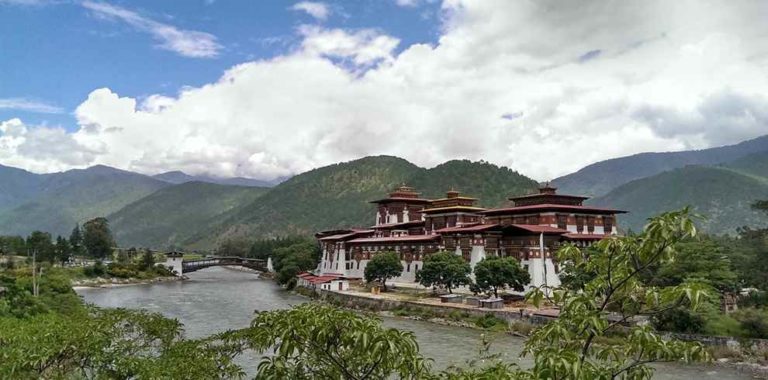
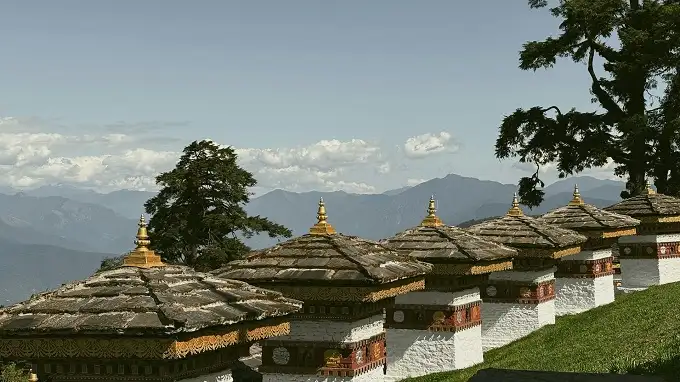
After breakfast drive to Punakha / Wangdue, On the way Stop at Dochu-La-Pass (3150 mts.). to view the higher Himalayas. Arrival at Punakha check in at hotel. After noon visit Punakha Dzong - built in 1637 by Zhabdrung Ngawang Namgyal. For many years until the time of the second king, it served as the seat of the Government. The Dzong was named Druk Pungthang Dechen Phodrang (Palace of Great Happiness). Punakha is still the winter residence of Je-Khenpo and King Jigme Dorji Wangchuck convened the first National Assembly here in 1952. After that take a short excursion trip to visit the Chhimi Lhakhang - The Temple, also known as “The Temple of Fertility” was built by Lama Drukpa Kuenley, “The Devine Mad Man”. Evening free for leisure. Overnight stay will be at Punakha / Wangdue.
Day 4 :
Punakha/Wangdue – Paro (140 km / 5 hrs)
After breakfast drive to Paro (7,483 ft.).
On the way stop at Lamperi to visit Royal Botanical Park - The park contains a rich biodiversity of flora and fauna and features a huge species of plants and animals including endangered species. On arrival check in at the hotel. Evening free for leisure. Overnight stay at Paro.
Day 5 :
Full Day Paro Sightseeing
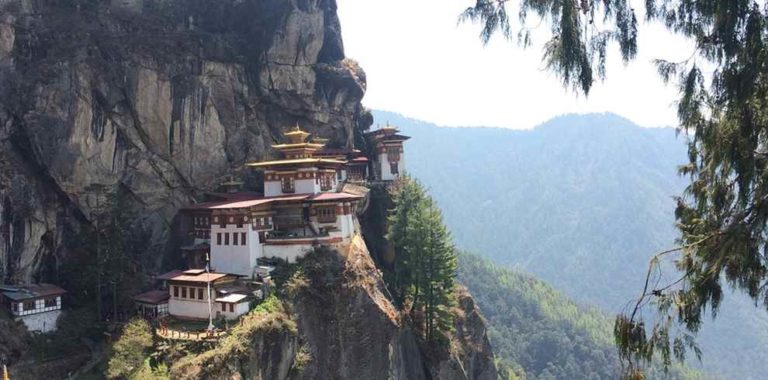
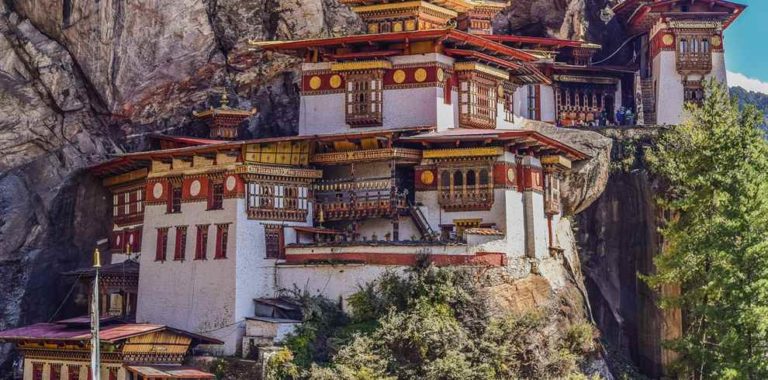
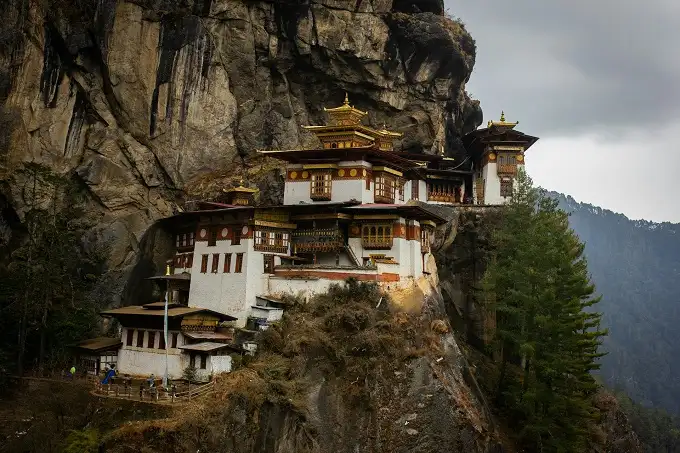
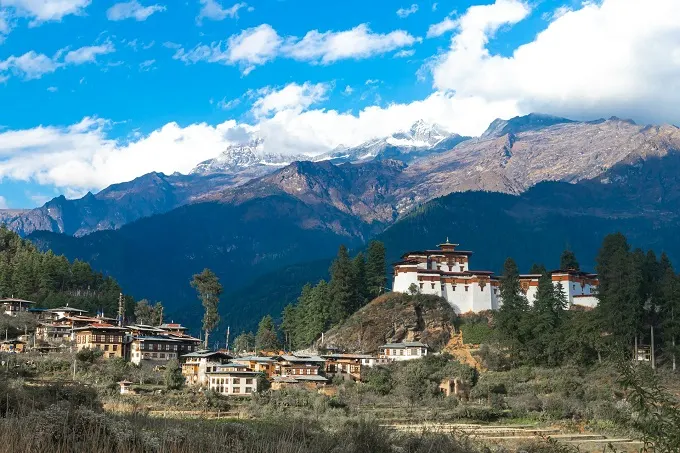
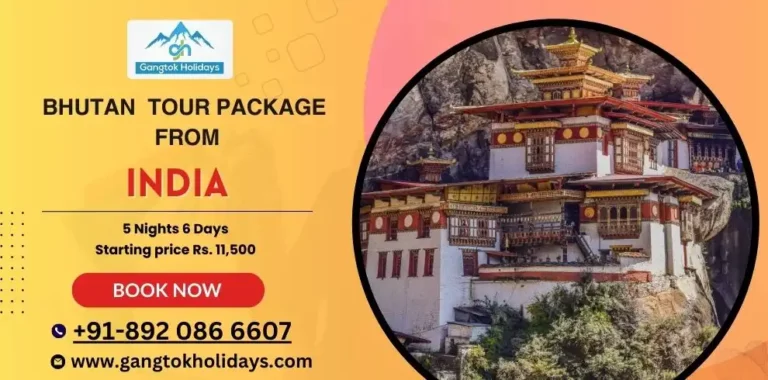
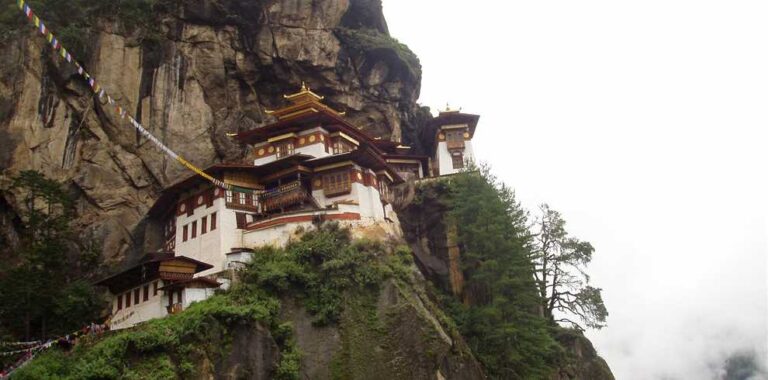
After breakfast, visit Drukgyel Dzong. Also visit the famous Paro Taktsang Monastery - called “Tiger's Nest” (2hrs hike from the base camp) & Kitchu Monastery. The overnight stay will be at Paro.
Day 6 :
Paro Airport (Return Journey)
After breakfast check out from hotel and drop at Paro Airport for your onward journey with sweet memory of Bhutan Tour along with GangtokHolidays.
The Trip Cost Includes
-Assistance on arrival
-Welcome drink on arrival
-Deluxe/3 Star Accommodation..(Equivalent)
-Daily Breakfast at hotel...
-Sightseeing and all transfers, As Per -Tour by Exclusive Ac Vehicle
-Toll tax
-Permit
-Driver's allowances
-24 - hour helpline
The Trip Cost Excludes
-Air fare / Train fare
-Personal Expenses like Entry charges, Telephone, Fax, Internet, Laundry, etc.
-Any extra Meals
-Any extra excursions or sightseeing apart from the tour itinerary or run by union vehicle
-Any entry fees for museum, park, Jeep safari, Elephant Safari or anything else
-Anything is not mentioned in the inclusion
-GST@5%
Hotel Used in the Bhutan Packages
Destination
Deluxe
3 Star
Thimpu
Hotel Pema Yoeseling Villa / Hotel Shantideva/Similar
Hotel Norpheling/Hotel Tara Phendeyling/ Hotel Lhaki Yangchuk Residency/Hotel Bhutan Kubera/Similar
Punakha
The Village Lodge/Hotel Chanan/Hotel Lobesa/Similar
Booking of any travel services represents your acceptance T & C set out herein. Please ensure that you read carefully and understand company T & C prior to confirm booking.
Your inquiry does not guarantee booking confirmation. Your booking will be initiate a reservation process. We will confirm with you via email/phone-call within 24 hours (working day).
Once confirm booking by a partial or full payment, cancellations will only be accepted in writing.
Package rates may vary due to hotel/volvo/car/air-ticket/train-ticket availability. We reserve all right to make price adjustment without any prior notice.
Please refer to our Cancellation and Money Refund Policy before you make any confirm booking.
Local tour agents reserves all right to make modifications in tour itinerary/arrangements, hotel and its location if deemed necessary.
The tour agent holds itself free of any responsibility for any cause, in all matters connected with hotels, accommodations, sightseeing tours and transportation, whether by air, rail, bus, car or any other means. Any baggage and personal effects are at the owner’s risk throughout the tour or in hotel unless insured.
As we will make all effort to retain a regular operation, we reserve all right to cancel any scheduled trip and issue a full refund to affected customers under special circumstances.
GangtokHolidays book here complete 5 Nights 6 Days Bhutan Package from Chennai with flight. We also arrange train or flight tickets for Chennai as per your convenience. Full tour planning, hotel booking, permits and local transport all managed by our team, so you can travel without any hassle. Travel from Chennai (MAA) to Bhutan (Paro – PBH) covers approx. 1,850 to 4,100 km, with a smooth 7 to 11-hour journey by flight (via Kolkata/Delhi Airport).
GangtokHolidays 5N / 6D Bhutan Package from Chennai Price
Package
Hotel
2 Pax (₹)
4 Pax (₹)
6 Pax (₹)
Bhutan Tour Package
Deluxe
20,900
13,900
11,900
3 Star
22,900
15,900
13,900
Bhutan Honeymoon Package
Deluxe
21,900
14,900
12,900
3 Star
23,900
16,900
14,900
ⓘ Trip package prices shown above are valid for September 2026 and are subject to change without prior notice.
GangtokHolidays Bhutan packages also available in 2N, 3N, 4N, 6N, 7N, 10 Days and 15 Days options. If you want any custom Bhutan trip, no problem; we will plan it as per your requirement. Just send your enquiry here.
Enquiry Now for Chennai to Bhutan Package
Why Choose Your Bhutan Package with GangtokHolidays?
Expert Itineraries: Deep regional knowledge for an authentic Himalayan experience.
Seamless Logistics: Smooth transit across 1,850 to 4,100 km journey from Chennai.
Permit Assistance: Stress-free handling of all visas and travel documentation.
Personalized Service: Dedicated support ensuring a comfortable, tailor-made mountain adventure.
Authentic Value: Curated local insights and quality stays with GangtokHolidays.
Bhutan Tour Package from Chennai
It is a country of adventure in South Asia. People who love to get that adrenaline rush it is a spot on destination for them. Bhutan Tour Package from Chennai is available at a great rate. A group trip is something that can be on the cards for you. You have everything available in the country right from Paragliding to White Water Rafting. The best part about the country you get to explore different sides of the place. Bhutan package trip is something you would wish for. You need to book everything in advance to avoid hassles at the last minute. Explore different places in the country and indulge in the beauty of the same.
Bhutan Honeymoon Package from Chennai
Marriage is a special occasion for everyone. It opens the gateway for a new life. You need to make sure you celebrate the occasion with a bang. Bhutan Honeymoon Package from Chennai is everything you can ask for. Thimphu is famous for its Buddhist heritage sites. A perfect gateway for the honeymoon couples. It is also the capital of Bhutan. The city has a wonderful Chu River which itself a scenic site. There are some wonderful festivals which take place in the city. The atmosphere is electric. Bhutan honeymoon package is everything what the couples are looking for. Do not miss out on the chance and book one.
Bhutan Tour Package from Chennai — Everything you need to know before you book
Our Bhutan tour packages from Chennai are priced between ₹11,900 to ₹23,900 per person, depending on trip duration and hotel category. For group rates: 2 pax from ₹20,900/person | 4 pax from ₹13,900/person | 6 pax from ₹11,900/person. All prices include hotel accommodation, daily breakfast and dinner, private cab transfers, sightseeing, and permit assistance. Flights from Chennai are arranged separately on request. Call +91-7357284671 for an instant quote.
March–May (Paro Tshechu festival, spring blooms) and September–November (post-monsoon clarity, Thimphu Tshechu) are the best months for Chennai travellers visiting Bhutan. You get clear skies, excellent mountain views, and comfortable temperatures. Avoid December–February (very cold at altitude; some passes close) and June–August (heavy monsoon). From Chennai, October–November and March–May are especially popular — perfect contrast to home weather. GangtokHolidays adjusts sightseeing timings seasonally to make the most of each period.
From Chennai, take a connecting flight to Paro (PBH) via major hubs like Kolkata or Delhi — airlines like IndiGo operate flights from Chennai, which can be linked with Bhutan’s national carriers, Druk Air or Bhutan Airlines, for the final leg. Paro International Airport is the main aviation gateway to Bhutan, located about 50 km from the capital city of Thimphu. Alternatively, you can travel closer to the land border by taking a train from Chennai to Siliguri (New Jalpaiguri/NJP) or flying into Bagdogra Airport (IXB) in West Bengal, from where Druk Air operates short, direct flights to Paro taking about 40 minutes. For land travellers, entry through the border town of Phuentsholing is highly popular; GangtokHolidays arranges comfortable private cab pickups right from Bagdogra, NJP, or Hashimara railway station to transfer you directly across the Bhutan border to your hotel — ensuring no confusion and a smooth immigration permit process. The scenic mountain road drive itself is part of the experience that Chennai travellers love photographing.
5N/6D covers Thimphu + Punakha + Paro; 7N/8D adds Haa Valley or Bumthang is the ideal duration for Chennai travellers. This covers all the major highlights — Tiger's Nest Monastery/Paro Taktsang (cliff-hanging monastery at 3,120m), Punakha Dzong (17th century fortress at river confluence), Thimphu Buddha Dordenma statue (169 ft), Dochula Pass (108 chortens with Himalayan panorama), Haa Valley, Phobjikha Valley (black-necked crane habitat), National Museum of Bhutan. GangtokHolidays offers flexible itineraries from 3 nights to 10+ nights. We build the itinerary around your travel dates and available leave rather than forcing a fixed template.
Our Bhutan packages from Chennai include: hotel accommodation (twin/double sharing), daily breakfast and dinner, all local transfers by private cab, airport/station pickup and drop in Chennai, sightseeing as per itinerary, and permit assistance for all restricted areas. Flights from Chennai are not included by default but we assist with booking on request. No hidden charges — your quoted price is your final price.
For Bhutan, permit requirements are: No visa for Indians — only Passport or Voter ID needed. Tourist Information Permit (TIP) obtained at Phuntsholing border — GangtokHolidays handles. Bhutan SDF (Sustainable Development Fee) ₹1,200/person/night — included in package price.. GangtokHolidays handles all permit paperwork on your behalf as part of the package — you don't need to visit any government office or stand in queues. Just carry your original Aadhaar, Voter ID, or Passport from Chennai. We'll do the rest.
Bhutan is consistently ranked among India's safest destinations. Low crime, extremely hospitable locals, and well-maintained tourist infrastructure make it excellent for families, senior citizens, and solo women travellers from Chennai. GangtokHolidays assigns police-verified local drivers and experienced guides on all tours. We have an excellent safety record across thousands of Chennai travellers every year.
Paro 2,280m; Thimphu 2,334m; Punakha 1,200m; Dochula Pass 3,050m; Tiger's Nest hike ends at 3,120m. Most travellers from Chennai adjust comfortably to Gangtok and Darjeeling elevations. For higher altitudes (North Sikkim, Nathula, Gurudongmar), GangtokHolidays builds mandatory acclimatisation nights into the itinerary. We advise: stay hydrated, avoid alcohol on the first day at altitude, and consult your doctor about Diamox if you have history of altitude sensitivity.
Must-try dishes that Chennai travellers rave about after a Bhutan trip include Ema Datshi (Bhutan's famous chilli and cheese dish), Phaksha Paa (pork with chillies and radish), Jasha Maru (spiced chicken stew), Momos, Hoentay (traditional buckwheat dumplings), and Bhutanese Red Rice. Don't miss Suja (traditional butter tea) and locally made cheese products. In cities like Thimphu and Paro, travellers can enjoy authentic Bhutanese meals at local restaurants and farmhouses. GangtokHolidays' partner hotels serve a mix of local and standard Indian food — let us know dietary preferences at booking.
GangtokHolidays is a ground operator based locally in the North East — not a Chennai middleman outsourcing everything. We own our vehicles, have direct hotel contracts, and our team has lived and worked in this region for years. You get: accurate on-ground information, 24×7 support during the trip, no surprise costs, and genuine care for your experience. Our Google Reviews from Chennai travellers speak for themselves. Call +91-7357284671 to speak with our team directly.
Still have questions? Our North East travel experts are available 24×7.
Straight from our team’s firsthand experience planning Bhutan trips for Indian travelers
Bhutan Isn't Built for Backpacking
We tell every first-time Bhutan traveler the same thing upfront: this isn't a shoestring destination. There's a daily Sustainable Development Fee, a mandatory 3-star (or higher) hotel requirement, and a licensed guide with you at all times once you're beyond Thimphu and Paro. Solo shared-cab hopping and squeezing costs to the last rupee simply isn't how a Bhutan trip works. In exchange, you get a country that has deliberately kept tourism low-volume and high-value - pristine forests, uncrowded monasteries, and a level of hospitality that's genuinely hard to find elsewhere in the Himalayas. When we build a Bhutan package, we're not padding the price; the fees and hotel category are government-mandated, and we build the itinerary around getting you real value on top of them - the right guide, the right pace, and the right mix of culture and scenery for the days you have.
Understanding the SDF (Sustainable Development Fee)
For Indian nationals, the SDF is Rs. 1,200 per person, per night - children aged 6-12 pay half, and kids 5 and under are exempt entirely. It's paid in cash at immigration, and only in INR 100 or 500 notes, so carry the exact amount since officers don't keep change. This isn't a padded agent markup; it goes straight to the Bhutanese government and funds free healthcare, education, and infrastructure for locals and visitors alike. We usually explain it to guests as this: you're not just paying for your trip, you're contributing directly to how Bhutan sustains its environment and culture. There's also a 24-hour SDF waiver if you're only staying in the border towns like Phuentsholing, which we factor in when a group wants a short land-border visit without going deeper into the country.
Documents You Actually Need
For Indian travelers, a passport with at least 6 months' validity is the smoothest option - it gets stamped on entry and exit. If you don't have one, an original Voter ID also works, though Aadhaar is not accepted at immigration. For children without a passport, we recommend carrying the original school ID along with the original birth certificate. We always advise guests to keep these in an easily accessible pouch, not buried in check-in luggage, since you'll need them at multiple checkpoints - immigration counters, hotel check-ins, and sometimes at internal checkposts. If you're booking through us, we double-check this list with you well before departure so there are no surprises at the border.
Best Time to Visit
The classic windows are early March to end of May, and early September through mid-December - stable weather, clear mountain views, and the best festival calendar. That said, we're increasingly sending guests in winter and even monsoon and they come back happy; winter brings a chance of snowfall at higher altitudes like Phobjikha and Haa, which has its own quiet charm, while monsoon (June-August) means lush green valleys but a real risk of landslides disrupting road travel. If your dates are flexible, we'll always steer you toward the peak windows first. If they're not, we'll tell you honestly what to expect for your specific month rather than oversell it, and adjust the itinerary to reduce weather-related risk.
Getting to Bhutan: Air vs Land
There are two ways in: fly into Paro (the only international airport, served by Drukair and Bhutan Airlines from Delhi, Kolkata, Bagdogra, and Guwahati) or cross by land through Phuentsholing, which is the most common route for our Siliguri-based guests. From Siliguri/NJP/Bagdogra, it's roughly a 4-hour drive to Jaigaon on the India side. The trade-off is real: flying is more expensive but gets you straight into your first destination with one of the most spectacular mountain landings anywhere. Coming by land is considerably cheaper but adds two full days of just driving, since Phuentsholing to Thimphu or Paro is another 5 hours each way. We help guests weigh this based on budget and how many vacation days they actually have.
Why We Recommend Booking Through a Local Agent
You're not required to book through an agent, but if it's your first Bhutan trip, especially with family or a larger group, we genuinely recommend it - not to upsell, but because the logistics (guide, driver, hotel availability, permit paperwork) are more fragmented than most travelers expect. Hotel availability is tight, especially in peak season, and needs booking at least two months ahead. If you do book independently, always get a written confirmation voucher from the hotel with your name and check-in date, or it may not hold up at immigration or check-in. From our experience, going through an established Bhutanese-linked agent doesn't inflate your cost much - the return in avoided last-minute scrambling and smoother immigration processing is usually worth far more than the small markup.
Where You'll Be Staying
Every tourist in Bhutan is required to stay in hotels licensed by Bhutan's Department of Tourism, minimum 3-star category - and that usually includes a free breakfast buffet as part of the rate. In select valleys like Phobjikha or Haa, licensed homestays are also an option if you want a closer look at local family life, though these need the same tourism department licensing. What guests are often surprised by is how limited room inventory actually is, particularly during the March-May and September-December peak windows - we always push for at least a two-month booking runway to lock in the properties we actually want for your group, rather than whatever's left closer to the date.
Building the Right Itinerary
There's no single correct itinerary - it depends on whether you're entering by air or land, how many days you have, and whether you want an adventure-heavy trip or a slower cultural one. As a rough guide: 5 days via Phuentsholing comfortably covers Thimphu and Paro, including the full-day Tiger's Nest hike. 6-7 days lets you add Punakha. 8 or more brings Phobjikha into range, and 9-plus opens up Trongsa and Bumthang. Flying in and out typically shaves about two days off these numbers since you skip the long overland transfers. When we design an itinerary, we're mapping your actual interests and days against this framework rather than handing you a template - a trekking-focused traveler and a temple-and-photography traveler shouldn't get the same route.
Monument & Monastery Entry Fees
Entry fees at major sites are modest and fixed by the government - Taktshang (Tiger's Nest) and Simply Bhutan are Rs. 1,000, while sites like Kyichu Lhakhang, Changangkha Lhakhang, Memorial Chorten, Tashichho Dzong, Punakha Dzong, and Chhimi Lhakhang are Rs. 500 each. Children between 6-18 get a 50% reduction, and those 5 and under enter free. A number of significant sites - Jakar Dzong, Simtokha Dzong, Buddha Dordenma, Trongsa Dzong, and several others - actually have no entry fee at all. These charges aren't usually bundled into your travel agent's package, so we make sure guests know to budget separately for them, along with mandatory travel insurance, which is required for all tourists.
Handling Money in Bhutan
The Bhutanese Ngultrum (BTN) is pegged 1:1 with the Indian Rupee, and INR 100 and 500 notes are accepted almost everywhere - other denominations aren't. ATMs are widely available in Thimphu, Paro, and Phuentsholing (look for Bhutan National Bank, Bank of Bhutan, or Druk PNB), though they thin out fast in remote areas. VISA cards tend to work more reliably than MasterCard, and most ATMs cap withdrawals around Rs. 10,000 per transaction, so larger withdrawals need multiple attempts. There's usually a small transaction fee per withdrawal too. One thing we always clarify: despite what some Indian banks' terms may state, most major cards do work fine in Bhutan in practice - we've seen it firsthand with guest after guest.
Local Etiquette to Keep in Mind
Bhutanese culture is soft-spoken and deeply respectful, and a little awareness goes a long way. Bargaining isn't really practiced - you can politely request a discount, but demanding one is frowned upon. Littering carries real fines, photography around religious artifacts often needs discretion or permission, and raising your voice is considered rude in a culture where most people speak gently. Finger-pointing is best avoided, and silence is expected inside heritage and religious sites. If you're seated on the floor with a monk, elder, or host, sitting cross-legged is the polite norm. We brief every guest on this before departure - not as a list of restrictions, but because understanding it tends to make the whole trip feel warmer and more welcoming rather than awkward.
Traveling With Kids or Senior Citizens
Bhutan's altitude and climate are noticeably gentler than other Himalayan destinations like Ladakh, Sikkim, or Himachal Pradesh, which is exactly why we see a good number of senior citizens travel here comfortably each year. Travelers above 70 or under 10 can visit without issue as long as they're reasonably fit and not managing a condition that needs constant medical monitoring. That said, we always tailor the pace for these groups - fewer long trekking days, more flexibility built into the schedule, and hotels chosen with easier access in mind. If Tiger's Nest is on the itinerary, we discuss realistically whether the full hike or the lower viewpoint makes more sense for the group's fitness level.
Hidden Gems Beyond Thimphu and Paro
If your days allow it, we always encourage guests to go beyond the two big names. Bumthang Valley is considered Bhutan's spiritual heart, dotted with ancient temples like Jambay Lhakhang and Kurje Lhakhang. Phobjikha Valley, a glacial valley famous for its migratory black-necked cranes, is stunning even outside crane season, and Gangtey Monastery nearby offers some of the best sunrise views in the country. Haa Valley, tucked away in the west, is quieter and blooms beautifully in spring. For travelers who want to see traditional Bhutanese weaving up close, Khoma village in Lhuentse is genuinely special and sees very few tourists. Even one extra day spent in one of these valleys tends to become the most memorable part of the trip - we try to build at least one into longer itineraries.
We got a wonderful experience "Darjeeling and Gangtok trip" the hotels were comfortable ,the transfer ,sighseen all were very smooth would definitely like to book again.
This travel agency is a very Nice, plan your trip with gangtok holidays.my tour is very nice and company and all staffs very good . He was well behaved Thanku so much gangtok holidays team
Last week, we went on a trip to sikkim organised by gangtok holidays.It was a customised super deluxe category one which was very well organised . Everything went smoothly and we had a wonderful time. There was some miscommunication at some point but it was solved. Drivers and cars provided were very good. Hotels were good but at lachung it was not so good.Anyway, thanks to gangtok holidays for the wonderful trip. I would recommend you to go on holidays wiih gangtok travels.
An authentic, reliable and most punctual travel and tour agency. Thank you Thank you team of Gangtok Holidays for your mind-blowing services in all aspects. Hope to make a more special trip with Gangtok Holidays near future.
I booked a complete MAP tour package for Sikkim and Darjeeling including Hotels, Meals and Transportation with Neha from Gangtok Holidays for my Family of 4 members. Between 9th Dec to 16th Dec. What I like most about is that what was promised was delivered, Clean and New Cabs with experienced drivers. Mr Bichung was one of them. Very good hotels -Dome Palace in Gangtok, Himalayan Retreat in DJ and Lauchng Continental in Lachung with very good food with your choice and inhotel services. Staff was very courteous specially Sanjay at Doma palace. Transfers were smooth and seamless.
My family most liked the real time support from Gangtok Holidays, specially from Neha.
Thanks Gangtok Holidays for making my family trip memorable and hassle-free.
We are 7 to 8 childhood friends who have decided to go to Tourism every yearwithout fail. This year we had decided to visit Darjeeling and Gangtok. Booked the train 3 months in advance now had to choose the tour agency. Inquired locally for it but found it too expensive so searched tour agency in Gangtok on Google. Contacted Gangtok Holidays as the reviews were good and they offered us a package at a very low price.
They provided exactly what they promised us in the package. Proper guidance from time to time, attending every call, high quality hotel everything was as planned. Special thanks to Vijender Singh, Manoj Sir and Neha Madam